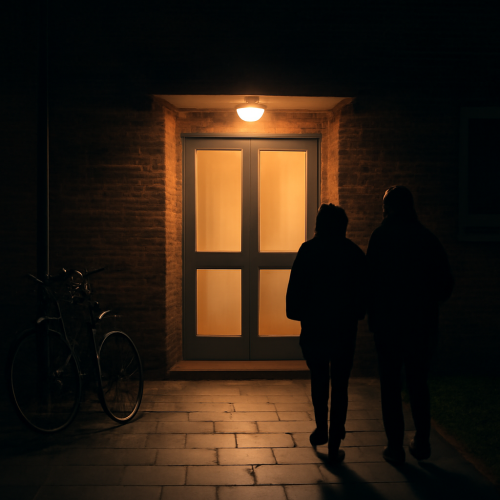
Part of the workshop was simply listening. Residents of the estate were invited to photograph and describe their own outdoor lighting, and the accounts that came back turned out to be more precise than any survey of lux levels.
The dark tunnel
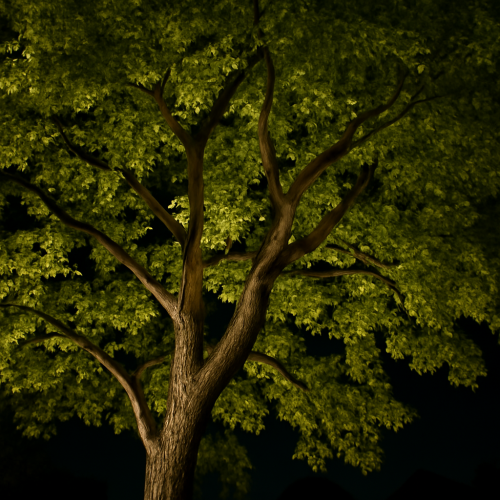
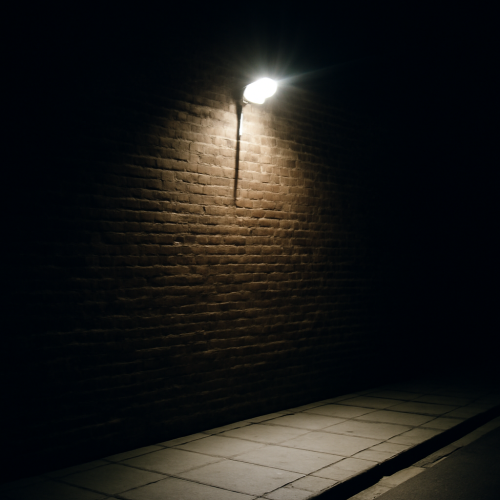
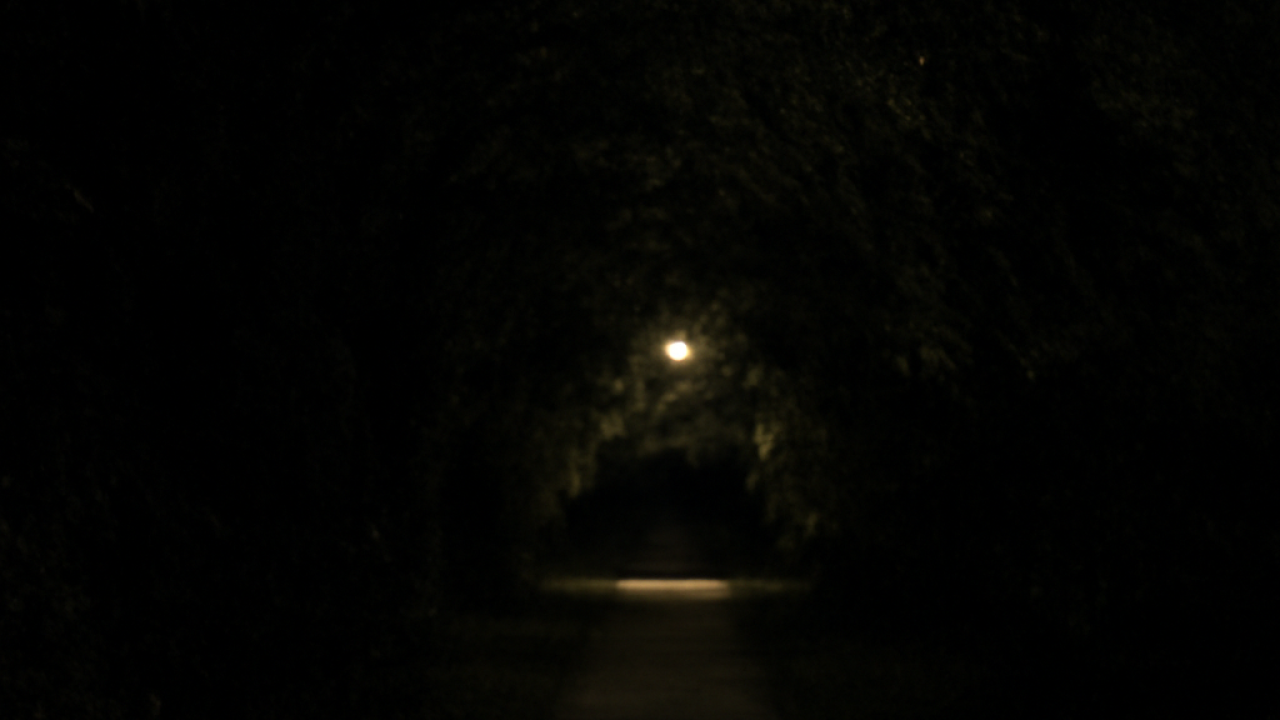
One long-standing resident — eighteen years on the estate — described a narrow side street on the southern edge of the estate, unusual for its row of five plane trees. The trees are a source of local pride, even when people complain about the dark. At dusk they produce what the account called a “dark tunnel” effect; once the leaves fall the street is left bare as well as narrow, and in winter the absence of leaves and of any landscaping gives the block the faint feeling of an army barracks — the more so because the buildings opposite are not homes, so there are people around who are not at home there.
Streets that feel owned
The estate walk and the guerilla lighting event during the workshop changed how that resident thought about walking in the area after dark, and raised the question of why some streets feel owned by the people who live on them and others do not. The examples offered were journeys elsewhere in London that are a pleasure at night: a bus ride down a tree-lined avenue, a walk home along the river. Both take in avenues of trees picked out by lighting rigged into the branches — many small blue bulbs that look a little like fruit.
Festive rather than harsh
The proposal that followed from this was concrete. Lighting in the branches would work well on a narrow road whose plane trees mark out its whole length. Instead of the barracks feeling, or the sense of a street to be avoided, there would be light that reads as festive and invites people to walk underneath it and look up. Combined with low-level lighting for visibility, it would be far less intrusive outside the windows than hard illumination, and would offer a different route to feeling secure: making a small side road feel special and warm rather than merely bright.
That is the argument the workshop was testing — that the security a street needs at night is not always the same thing as more light.