The workshop
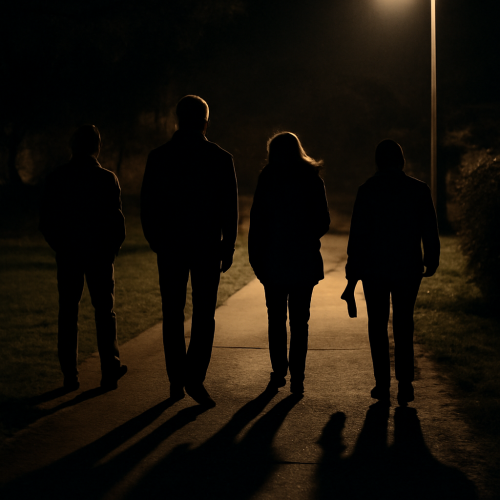
Urban Lightscapes / Social Nightscapes took the form of a week-long workshop on outdoor lighting, held on a housing estate in London. It was put together by Configuring Light / Staging the Social, a research programme within LSE Cities, and it put practitioners of lighting design in the same room as architects, planners and social scientists, all working on one site.
The task set was narrow and practical: devise lighting proposals that would make the estate’s outdoor spaces better to be in. Researchers worked alongside each design team on the social side of the enquiry, so that proposals would rest on some understanding of the place and the people in it rather than looking convincing on a plan and failing on the ground. Over the week the teams kept talking to residents — how the estate is actually used, where light is wanted and where it is not — and tried fittings out on the spot.
What came out of it
The project was documented in two short films and in an exhibition. A report on the workshop was published afterwards, alongside a handbook for social research in design — the attempt to turn the week’s method into something another team could follow.
Configuring Light / Staging the Social
Based at the London School of Economics, Configuring Light / Staging the Social approaches light from the social sciences: how it comes to be arranged as it is, and who that arrangement serves. Light is simultaneously a material and a piece of social infrastructure, and it surfaces in a long list of pressing questions — energy and environment, health and wellbeing, technology and the creative industries, planning and regulation, aesthetics and heritage.
For all that, social research has had remarkably little to say about it, and that gap is what the programme exists to close. Its projects run across research, public engagement and teaching, and each is concerned with how light, treated as a material, ends up built into the environments people live in — in every case through collaboration between academics and practitioners.
Social research in design
The workshop followed a practice-based model that carries lighting professionals through a fixed sequence: take one urban community, analyse what is wrong, design something, and put it to the local council. Workshops of that shape have ended in permanently installed lighting schemes, and in residents who went on taking part in wider arguments about design and planning. That is the reason for the sequence. An exercise that stops at a presentation changes nothing; one that reaches a council decision, and leaves a community accustomed to being asked, changes the street.
No names, contact details or funding information from the original page are reproduced here.